So, considering the current hostile climate in gaming culture brought forth by outrage warriors, I already knew years ago that talking about Dead or Alive wasn't so much a possibility as an inevitability. While these days I mostly shy away from doing responses in favor of talking positively about female characters and promoting games with them, I have been irked by the recent announcement that Dead or Alive Xtreme 3 won't be making its way into Western territories by, get this, the hostile environment surrounding female game characters created by hyper-criticism and outrage culture. According to rumor it's become so ridiculously absurd that Japanese developers now believe Western gamers hate female protagonists.
(Dead or Alive-related Images mostly from Dead or Alive 5: Last Round, as I have no easy way of screencapping Dead Or Alive Xtreme 2)
The Censorious Nature of Outrage Culture
The Dead or Alive Xtreme 3 Controversy

Recently it was announced Dead or Alive Xtreme 3, the beach-sports spin-off to the Dead or Alive fighting series, won't be localized to Western countries. A Koei Tecmo representative on their Facebook page clarified (in rather broken English) this was the result of the sort of hyper-criticism female characters get by virtue of being female characters, with Dead or Alive often being seen as the worst offender because of the inclusion of skimpy outfits and jiggle physics. Later Koei Tecmo tried to distance themselves from this explanation while at the same time confirming that it is true (what else do you think 'respecting and strategizing to support the different global audiences' means?). A bit later it was revealed Idea Factory is taking a similar approach in no longer localizing games which might have to be censored for the West's delicate sensibilities. Street Fighter V's producer also came forward admitting this sort of thing is what caused the removal of R. Mika's buttslap. As if confirming that the West is unable to handle sexy content, YouTube helpfully closed the account of Senran Kagura's publisher and Playboy of all people called R. Mika's outfit 'objectively objectifying' (which, unless it turns her into a statue, is an absurd statement). There's also Nintendo censoring their Western releases (Fatal Frame 5, Xenoblade X), but they've sadly been doing that since forever. Outside of gaming we also recently had people concerned over Star Wars' princess Leia in her slave outfit.
(Dead or Alive-related Images mostly from Dead or Alive 5: Last Round, as I have no easy way of screencapping Dead Or Alive Xtreme 2)
The Censorious Nature of Outrage Culture
The Dead or Alive Xtreme 3 Controversy

'There is more than one way to burn a book. And the world is full of people running about with lit matches.'
- Ray Bradbury
- Ray Bradbury
1. Introduction
Recently it was announced Dead or Alive Xtreme 3, the beach-sports spin-off to the Dead or Alive fighting series, won't be localized to Western countries. A Koei Tecmo representative on their Facebook page clarified (in rather broken English) this was the result of the sort of hyper-criticism female characters get by virtue of being female characters, with Dead or Alive often being seen as the worst offender because of the inclusion of skimpy outfits and jiggle physics. Later Koei Tecmo tried to distance themselves from this explanation while at the same time confirming that it is true (what else do you think 'respecting and strategizing to support the different global audiences' means?). A bit later it was revealed Idea Factory is taking a similar approach in no longer localizing games which might have to be censored for the West's delicate sensibilities. Street Fighter V's producer also came forward admitting this sort of thing is what caused the removal of R. Mika's buttslap. As if confirming that the West is unable to handle sexy content, YouTube helpfully closed the account of Senran Kagura's publisher and Playboy of all people called R. Mika's outfit 'objectively objectifying' (which, unless it turns her into a statue, is an absurd statement). There's also Nintendo censoring their Western releases (Fatal Frame 5, Xenoblade X), but they've sadly been doing that since forever. Outside of gaming we also recently had people concerned over Star Wars' princess Leia in her slave outfit.
This is a bad development. Not an unforeseen one, mind you. I myself have spoken out multiple times that the extreme criticism any female character gets these days, rather than being a catalyst for more positive representations, is instead going to end up making artists and developers so nervous that it'll have a detrimental effect on representation and diversity instead. Keep in mind that just weeks before this current issue, the very same people who for years have been demanding Nintendo made a female alternative for Link, were criticizing the announcement of exactly them getting what they asked for as a bad thing and right now they are criticizing Laura Bailey for voicing a character in Uncharted 4 of a different ethnicity than her.
That's because to these people the battle is more important than their stated goals. Whether it's for the personal satisfaction of fulfilling a misguided hero complex or merely monetary gain by appealing to the former, to them there is no true goal because the actual goal of this stupid war is the war itself and groupthink will make sure all on board are slowly radicalized into taking offense at bloody everything. As such they will never be pleased as they continue arguing for how everything under the sun is unacceptable and we'll all be worse off because of it (it's not a conspiracy theory when it's quantifiable and happening).
Note on the title: censorious comes from the word censure and means "overly harsh criticism" or "strong disapproval" rather than the commonly understood definition of censor. However as they do share an etymology it works out rather nicely as "being censorious" is often the prelude to censorship.
If your only experience with the Dead or Alive Xtreme series has been YouTube videos mentioning it or talking about it, there's a high likelihood you've never even seen a moment of gameplay from the entire series and you're only aware the game is about volleyball because the first game in the series was explicitly named "Xtreme Beach Volleyball". My theory on that is the "sexy cutscenes" are more popularly watched online than in-game on one hand, and outragers show those scenes specifically because they're maximally problematic on the other hand. What this means though is that barely anyone has any idea what the game is even about except for it having the Dead or Alive girls in bathing suits. As a fan of the Dead or Alive series, I did go "what the hell" over a priced-down copy of Dead or Alive Xtreme 2 (2006) for the Xbox 360 and I did play and enjoy it (to a point, you'll see why in a second) so I'll explain a bit what it is about.
So the game is set up like a vacation on a tropical island. You pick the girl you want to play as, you are assigned a random volleyball partner and you get 14 days to do a set of activities (or just relax). Each day is cut up in 4 parts, 3 for morning, noon and evening when you get to do stuff around the island, and one at night when you can organize the stuff you collected, send some gifts you couldn't hand out in person during the day, or go to the casino to lose all the money you didn't make enough of during the day.
The main events to engage in during the day are Jet Ski races and the aforementioned volleyball (winning at volleyball pays out more than Jet Ski races but there's a higher risk factor). Lesser activities are randomized mini-games or short scenes of the girl relaxing (which function as a way to skip to the next time period). As the vacation progresses, these activities get progressively harder. While a Jet Ski race the first day is just a few laps in open water, it's a tour around the island, through small rivers and houses on poles the last day. Engage in all of that and you've got yourself a relaxing though challenging beach-sports game.
Now for the part that legitimately makes me think of Dead or Alive Xtreme 2 as one of the hardest video games I've ever played. You see those sexy bathing suits people go on about? Well, the way in which the game "progresses" (in as much as that's possible) is by you collecting the items and bathing suits available in the game. How do you do that? Well by buying them from the store with the money you get from the activities. But wait, you can only buy the set of bathing suits from the girl who you are playing as (which in itself is time consuming). To get the sets from the other girls you need to play as that other girl and gift that suit back to your own character. But wait, you can't just be sending them bathing suits as gifts because the other girls won't just accept them. No, first you need to become friends. How do you become friends? Well by giving them other gifts from the Zack of all Trades gift shop. But they won't just accept any gifts. No, in order for them to accept this gift, you have to know which items specifically are of interest to this particular girl, you need to wrap it in wrapping paper of her favorite color and know at which time of day she's in the mood to socialize (Ayane for example isn't a morning person. Christie is a NEVER person). Also if that girl's inventory is full, she will accept (maybe) the item but it will disappear, meaning you have to switch characters often anyway to make sure all your inventories are put safely in storage.
Now, if you've done all that, you can attempt to gift a bathing suit. Sadly you'll soon learn that accepting the gift is still based on a roll of the dice, just with better odds if she likes you. If she doesn't like the suit you just gave her, your friendship stats will decrease. You also need to repeat this entire process for every suit you intend to give and your friendship status is erased at the end of the vacation. There's 294 suits total and 9 girls. Good luck! This is why the IGN walkthrough for this game is literally a series of spreadsheets.
Oh, but that's not all. Remember that pole dancing scene that so often gets shown when talking about this game? Here's how you get that one: you have to go to Christie's slot machine (the game never tells you this and there's 9 slot machines) and hit nine jackpots. Yeah, those clips are popular on the Internet because they are very well hidden and very difficult to get in the game itself. Anyone trying to represent the game with that scene simply hasn't played it or is misrepresenting it.
Seriously, if you play Dead or Alive Xtreme like a relaxing beach sports/vacation game, it's bliss. If you actually want to engage in all this fanservice stuff the game gets lambasted over, good luck because you'll be needing it. The fact that the "dating" aspect is so difficult is what I think is an interesting point though. While this game certainly doesn't shy away from fanservice, it does expect you to get to know the specific nuanced personalities of the different girls. Heck, even your assigned partner will leave you if you don't take care of your friendship with her (which locks you out of the volleyball segments, which pays out the best money with which you could buy gifts to befriend a new partner, meaning you are likely screwed for that 14-day rotation). That's the difference between sexualization and sexual objectification. They are the ones in charge and you'll get nowhere unless they want to.

For some people it's easy to justify why Dead or Alive Xtreme isn't such a bad thing to lose (and thus being okay with censorship when it's things they don't like). For a moment setting aside that it is in fact mainly a sports game and not uniquely comprised of cutscenes with women in skimpy bathing suits or almost-impossible to get pole-dancing scenes. In a culture where admitting to liking sexual stuff is to be ashamed of, especially if it's cartoons, even people who might like games showing a lot of virtual skin probably aren't jumping to admit that they like it, maybe they don't even want to buy out of fear of peer pressure.
But a game with a specific target audience in mind is why it's a problem to not have it, isn't it? Dead or Alive Xtreme is a niche game catering to niche interests. Removing games of niche interests decreases diversity. Imagine if future Gone Home's disappear because of pressure from religious groups against portrayals of homosexual relationships. You don't open up gaming to a larger audience by removing things that might be seen as undesirable, that's promoting homogeneity over diversity and makes the entire thing stale. This should really go without saying but 'diversity' is larger than 'what you personally approve of' and isn't achieved by merely sprinkling different ethnicities around.
Personally, I'm not sure if I'll be importing Dead or Alive Xtreme 3 myself yet. I don't own a PlayStation 4 or a Vita so the combined cost might be a bit too much for just this one game. Instead I bought the skimpiest costume pack I could find for Dead or Alive 5 Last Round.
I also bought Senran Kagura a while back when that controversy flared up and it turned out to be a pretty solid game with stories on the difficulties of navigating high school as a girl in her late teens, it just so happens the teenage girls are also ninjas and the combat mechanics have clothing damage. It seems these days controversy is a more reliable method of discerning good games than reviews are. You know, when outrage warriors were raging over Quiet not wearing a heck of a lot, the rest of us were being educated on phantom limbs and their real-world prosthetic replacement options while building a truly diverse Mother Base. It even opened up discussions about the possibility of every man on Mother Base being in an early stage of transitioning.
Every time a female character comes up these days in any capacity, we have the press and outrage warriors bending over backwards to reduce them to a pair of breasts while ignoring everything the character actually does or stands for. What the hell did you think you were doing? You can't use Dead or Alive Xtreme as the number one of countless "Top 10 most misogynistic games", lump completely benign games like the Tomb Raider series or Okami in the mix to fill up the rest of your clickbait article, for a decade and then turn around claiming you never intended to have any sort of effect. That's just eating your cake and having it too and betrays rampant immaturity on the part of these critics, humorously as they themselves often demand everyone else to grow up so the industry can itself "grow up".
However that desire for an industry to be seen as "grown up" was what resulted in the self-censorship of the animation industry (as part of the Motion Picture Production Code, aka the Hays Code) and the comic book industry (the Comics Code Authority, the formation of which was largely inspired by Fredric Wertham's Seduction of the Innocent (1954), a Tropes vs. Women avant la lettre). 60 years later comics and animation are still considered to be mainly childish things in the eyes of the general public. Clearly booting out the undesirable media hasn't done those any good, why should it be different for video games? Movies don't get seen as childish because of its massive porn industry (which gaming largely lacks anyway). Gaming is one of the largest entertainment industries on the planet, it's time we stopped apologizing for it.
People with this viewpoint often also hold the viewpoint that self-censorship is not censorship, as it is done to oneself. Well it obviously is censorship otherwise it wouldn't be called "self-censorship". The "self" is a qualifier, not a negation. The issue then is how much of a problem the self-censorship is. If the self-censorship is an issue of not believing in there being a market for the game, that's hard to call a problem. However since the last big release in the series, DOAX2 (Paradise being mainly a PSP port), saw almost tripple the sales in the West than in Japan, that's a pretty hard claim to substantiate as the data disagrees with that.
A second possibility is that Koei Tecmo doesn't believe in the market through the aforementioned blatant hate campaigns against DOAX2 by a loud minority of critics misrepresenting the consumer-base as having changed attitudes over the last 9 years since release. Or you know, the existing outrage culture that sprung up heavily criticizing practically all female characters (what's the counter for good examples at? A grand total of 4?), while from their perspective meant to improve these characters, might actually give the impression to an outsider that the market hates female characters. In which case, it is most definitely a problem since a minority is functioning as de facto gatekeepers through media pressure.
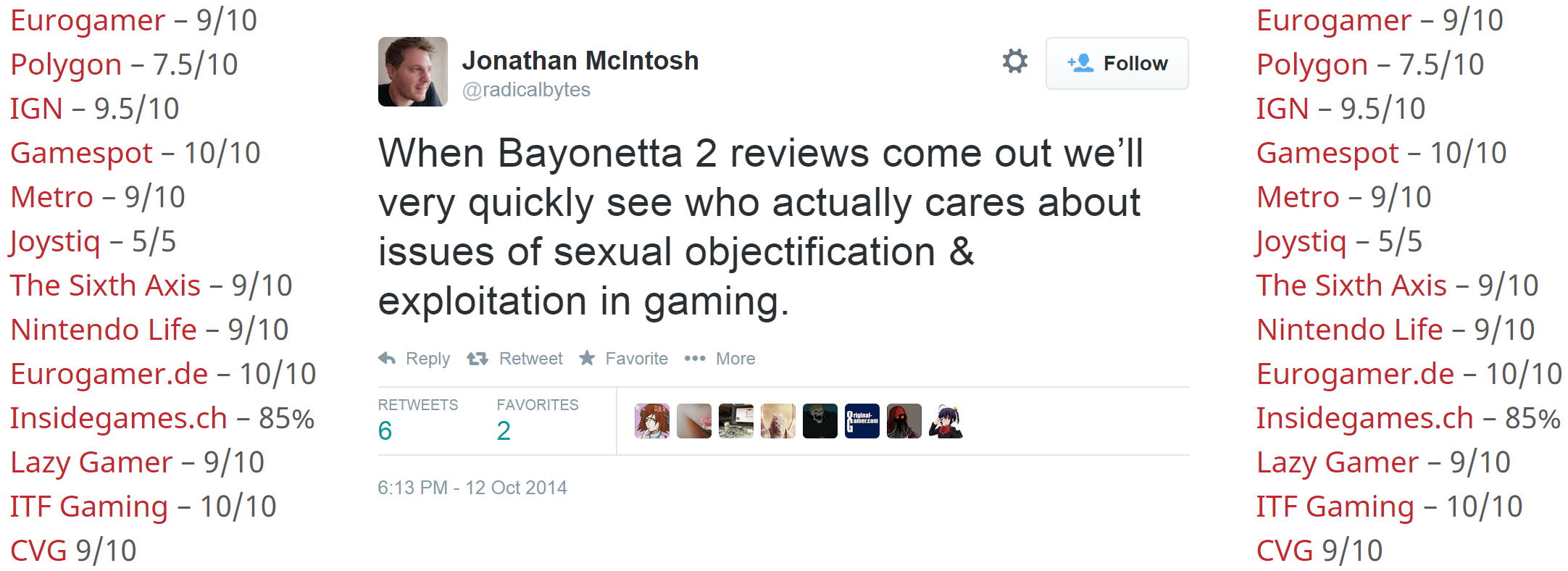
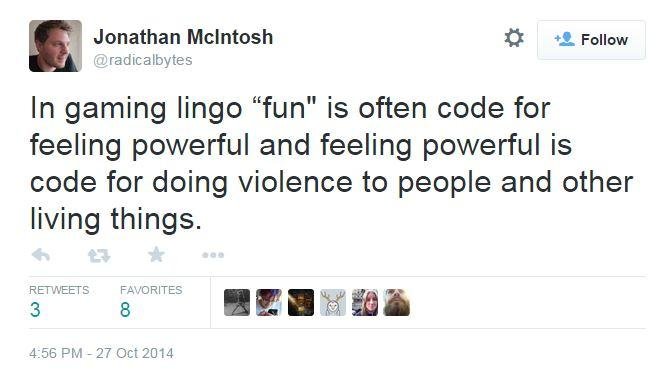
Now whenever someone somewhere is having fun, you can be sure Jonathan McIntosh (producer and co-writer for Feminist Frequency's Tropes vs Women series) thinks it's problematic. Of course the guy who practically demanded reviewers mark down Bayonetta 2 for progressive points, hates fun and can't stop complaining about violence in everything ever (often while looking forward to it), is going to have a problem with Dead or Alive. Yes, of course he does.
He isn't especially relevant to the DOAX3 situation in particular, but he (and by extension Feminist Frequency) has been one of the primary voices in the outrage movement for the last few years, so this is as good a time as any to shed some light on his talking points, because it all seems so terribly familiar.
In a 1908 article from The Nineteenth Century and After, Vol. LXVI by Bram Stoker (secondary link), most famous as the author of Dracula but lesser known as a liberal pro-censorship advocate (it's the combination of the two I want you to take notice of, I'm not implying 'liberal' by itself is a problem), argued in favor of self-censorship, and government-enforced censorship should the reticence of the true artist prove insufficient.
Stoker recognizes that fiction is the most powerful teaching method available as even Jesus Christ himself used it to educate his followers, as such Stoker argues fiction can also be used for evil. McIntosh agrees and staves this by bringing up Narrative Transportation Theory (Wikipedia link). Now by itself this isn't wrong, fiction does indeed allow us to absorb ideas better by virtue of us being engrossed by a narrative. The problem is that McIntosh fills in the gaps of the research with his own unsubstantiated ideas on how that makes fiction dangerous propaganda. There's a difference between people better accepting false information by being engrossed in media, and being indoctrinated into hateful world-views by them. In fact studies have shown that reading widely increases empathy so the reverse is true (which makes sense as that is the whole point of putting a viewpoint into a narrative).
Stoker argues the literature of 'moral misdoings' are written to profit off of humanity's base desires, as does McIntosh, which is code for "it's bad if people like it, especially if those people are not me". Make no mistake, the only reason McIntosh calls what he argues for "not censorship" is because of the negative connotations of that specific word, not because the definition is wrong. The guy argues in favor of instating actual censorship committees instead of an open market, for Christ's sake.

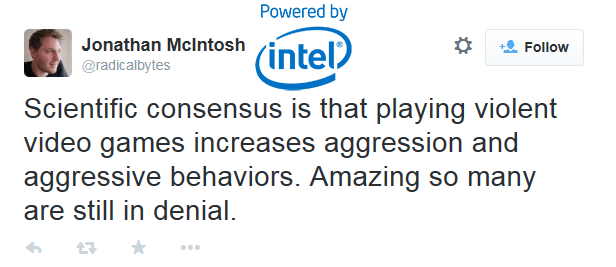
But should it come as any surprise Jonathan McIntosh espouses almost exactly the same position as a 100-year old explicitly pro-censorship advocate shy of calling for brutal police intervention? The only significant difference is that, where Stoker brings forth his religious convictions as the basis for his moral superiority and the prevention of evil, McIntosh merely has his baseless assertions and a small number of decades-old scientific studies which he parades as "scientific consensus", long buried beneath more voluminous contemporary research showing no consensus or reaching opposing results consistent with dropping crime data in the relevant areas, showing that the position he argues for might in fact be endangering women (and people generally). The only part that's (generally) agreed upon is a short-term increase in aggression in a handful of situations (we might as well ban traffic, as that increases aggression even more significantly. Although to be fair we don't allow children to engage in traffic either). Hardly worth taking your real-life pacifism (which is noble) into a crusade against violence in media for (which is a concept so old, even Homer's Iliad suffered from it).
But the fun part still has to begin. Now pay special attention to the following phrase from Stoker's article:
To conflate sexualization with sexual objectification is simply to vilify sex and sexual attraction itself, but to then make the argument that eroticism is in itself demeaning to women, well that says more about the mindset of the person making the argument than it does about those who can appreciate the eroticism.

Make no mistake, sexuality-based censorship hurts and limits women. Do not let the veneer of it being done to protect or help women fool you, that's the same justification for why in some countries it is forbidden for women to operate vehicles. Studies and crime numbers have shown that the widespread availability of pornographic material thanks to the Internet has only resulted in a decrease of sexual crime due to it actually being a safe alternative than the more violent means. Surprisingly humans do not lose their sex drives when sexually explicit material disappears and installing more safe outlets for potentially dangerous urges (when it goes out of hand, of course) is a good thing, who could have possibly guessed? As if the absence of a few video games could possibly undo several millions of years of evolution.
As I mentioned earlier: women design, act out, voice and enjoy these characters. Heck, some of them look like them so criticizing the characters for the way they look has an effect on real people. It's not like attractive people are less insecure just because they're attractive. The only, the ONLY, arguments you have against these characters is "some don't like them" and "eeeew, ugh" and the only sort of censorship you can substantiate with that is the kind that shouldn't leave your house. Nobody forces you to buy games you don't like and if someone does the problem isn't with the games.
Under the Code her flirtatious, sexually empowered personality simply wasn't done anymore, which meant she was redesigned with a more wholesome, traditional look. Audiences found the restrictions placed on Betty boring and soon lost interest, killing animation's most prominent and pioneering female character simply because moral guardians have a tendency to strike down on women first. Thank God Walt Disney wasn't far behind and managed to revive the female protagonist in animation by giving us Snow White. Otherwise we would only have been left with female protagonists as girlfriends to Oswald the Lucky Rabbit, Mickey Mouse and Popeye (who had his start as an animated character in a Betty Boop cartoon himself).
A rather unexpected area in which prudish attacks have historically wreaked havoc is non other than education itself; more specifically in the art of remembering. In Moonwalking With Einstein (2011), Joshua Foer describes how the art of memory has often been attacked by prudes and Puritans (he specifically names William Perkins of Cambridge (1558-1602)) after it had come to their attention practitioners of the memory palace technique in particular (which essentially allows you to map difficult to remember information to a location you are familiar with by placing images and objects in them) often used lewd imagery in their mental encoding since those stick out more vividly in the mind. That's right, a method of study itself was considered heresy by the Puritans.
Effective as the memory palace technique is, these days it's only popularly used in the competitive memory circuit. Actual students who it can benefit are still mostly relegated to a much less refined brute force approach of studying by pure repetition. That's not entirely the fault of the Puritans of course, modern conveniences like the printing press and more recently the Internet have made the arts of memory go largely out of style, but it's still worth noting that pure prudishness helped in the decline of effective study techniques.
(Incidentally, Feminist Frequency made a reference to BBC's TV series Sherlock's mind palace and claimed McIntosh used it to remember My Little Pony: Friendship is Magic names. You can now amuse yourself with the thought of Jonathan McIntosh spending a discernible amount of time mentally walking through his house encoding ponies on the off chance he'd ever need their names because otherwise that's not how bloody mind palaces work.)

The primary way in which gaming culture needs to grow up is in the respect we have for each other's preferences. You do not show maturity by calling Dead or Alive (or Dragon Crown) fans "12-year old" and you do not create an inclusive gaming environment by manufacturing new controversies every week, resulting in developers and publishers being afraid of backlash. This stuff is just sad.
So, at the risk of screaming in the void, I will leave you with this: if you are genuinely interested in making gaming a better place, get off the faux-outrage bandwagon that's been choking the life out of gaming for the last 3 years and which has been putting us on the fast-track to actual censorship. There's no excuse for this tribalistic nonsense from people claiming to be pro-diversity. Gaming is not so small that we need to push "undesirables" out, but we do need to learn how to get along with each other. Gaming is supposed to be fun for all, not a battle for bloody territory. Argue in favor of your preferences as much as you want, but stop tearing down those of others and stop arguing in favor of censorship even when you claim you aren't.
Am I being alarmist? Perhaps, but I know the history of moral guardian-based (attempted) censorship too well to not stand for the reversal of its obvious early effects. This stuff is well documented. Learn from history before it repeats itself. Self-censorship cripples industries. No way should we find this an acceptable course for gaming.

- Dead or Alive 5 Last Round on Steam
- Dead or Alive Xtreme 3 Fortune (PS4) - Play-Asia
- Dead or Alive Xtreme 3 Venus (PS Vita) - Play-Asia
And n
That's because to these people the battle is more important than their stated goals. Whether it's for the personal satisfaction of fulfilling a misguided hero complex or merely monetary gain by appealing to the former, to them there is no true goal because the actual goal of this stupid war is the war itself and groupthink will make sure all on board are slowly radicalized into taking offense at bloody everything. As such they will never be pleased as they continue arguing for how everything under the sun is unacceptable and we'll all be worse off because of it (it's not a conspiracy theory when it's quantifiable and happening).
Note on the title: censorious comes from the word censure and means "overly harsh criticism" or "strong disapproval" rather than the commonly understood definition of censor. However as they do share an etymology it works out rather nicely as "being censorious" is often the prelude to censorship.
 |
| Dead or Alive 5: Last Round |
2. A Look At: Dead or Alive Xtreme 2
If your only experience with the Dead or Alive Xtreme series has been YouTube videos mentioning it or talking about it, there's a high likelihood you've never even seen a moment of gameplay from the entire series and you're only aware the game is about volleyball because the first game in the series was explicitly named "Xtreme Beach Volleyball". My theory on that is the "sexy cutscenes" are more popularly watched online than in-game on one hand, and outragers show those scenes specifically because they're maximally problematic on the other hand. What this means though is that barely anyone has any idea what the game is even about except for it having the Dead or Alive girls in bathing suits. As a fan of the Dead or Alive series, I did go "what the hell" over a priced-down copy of Dead or Alive Xtreme 2 (2006) for the Xbox 360 and I did play and enjoy it (to a point, you'll see why in a second) so I'll explain a bit what it is about.
So the game is set up like a vacation on a tropical island. You pick the girl you want to play as, you are assigned a random volleyball partner and you get 14 days to do a set of activities (or just relax). Each day is cut up in 4 parts, 3 for morning, noon and evening when you get to do stuff around the island, and one at night when you can organize the stuff you collected, send some gifts you couldn't hand out in person during the day, or go to the casino to lose all the money you didn't make enough of during the day.
The main events to engage in during the day are Jet Ski races and the aforementioned volleyball (winning at volleyball pays out more than Jet Ski races but there's a higher risk factor). Lesser activities are randomized mini-games or short scenes of the girl relaxing (which function as a way to skip to the next time period). As the vacation progresses, these activities get progressively harder. While a Jet Ski race the first day is just a few laps in open water, it's a tour around the island, through small rivers and houses on poles the last day. Engage in all of that and you've got yourself a relaxing though challenging beach-sports game.
 |
| Still Dead or Alive 5: Last Round |
Now for the part that legitimately makes me think of Dead or Alive Xtreme 2 as one of the hardest video games I've ever played. You see those sexy bathing suits people go on about? Well, the way in which the game "progresses" (in as much as that's possible) is by you collecting the items and bathing suits available in the game. How do you do that? Well by buying them from the store with the money you get from the activities. But wait, you can only buy the set of bathing suits from the girl who you are playing as (which in itself is time consuming). To get the sets from the other girls you need to play as that other girl and gift that suit back to your own character. But wait, you can't just be sending them bathing suits as gifts because the other girls won't just accept them. No, first you need to become friends. How do you become friends? Well by giving them other gifts from the Zack of all Trades gift shop. But they won't just accept any gifts. No, in order for them to accept this gift, you have to know which items specifically are of interest to this particular girl, you need to wrap it in wrapping paper of her favorite color and know at which time of day she's in the mood to socialize (Ayane for example isn't a morning person. Christie is a NEVER person). Also if that girl's inventory is full, she will accept (maybe) the item but it will disappear, meaning you have to switch characters often anyway to make sure all your inventories are put safely in storage.
Now, if you've done all that, you can attempt to gift a bathing suit. Sadly you'll soon learn that accepting the gift is still based on a roll of the dice, just with better odds if she likes you. If she doesn't like the suit you just gave her, your friendship stats will decrease. You also need to repeat this entire process for every suit you intend to give and your friendship status is erased at the end of the vacation. There's 294 suits total and 9 girls. Good luck! This is why the IGN walkthrough for this game is literally a series of spreadsheets.
Oh, but that's not all. Remember that pole dancing scene that so often gets shown when talking about this game? Here's how you get that one: you have to go to Christie's slot machine (the game never tells you this and there's 9 slot machines) and hit nine jackpots. Yeah, those clips are popular on the Internet because they are very well hidden and very difficult to get in the game itself. Anyone trying to represent the game with that scene simply hasn't played it or is misrepresenting it.
Seriously, if you play Dead or Alive Xtreme like a relaxing beach sports/vacation game, it's bliss. If you actually want to engage in all this fanservice stuff the game gets lambasted over, good luck because you'll be needing it. The fact that the "dating" aspect is so difficult is what I think is an interesting point though. While this game certainly doesn't shy away from fanservice, it does expect you to get to know the specific nuanced personalities of the different girls. Heck, even your assigned partner will leave you if you don't take care of your friendship with her (which locks you out of the volleyball segments, which pays out the best money with which you could buy gifts to befriend a new partner, meaning you are likely screwed for that 14-day rotation). That's the difference between sexualization and sexual objectification. They are the ones in charge and you'll get nowhere unless they want to.

3. Diversity versus Large Target Audiences
For some people it's easy to justify why Dead or Alive Xtreme isn't such a bad thing to lose (and thus being okay with censorship when it's things they don't like). For a moment setting aside that it is in fact mainly a sports game and not uniquely comprised of cutscenes with women in skimpy bathing suits or almost-impossible to get pole-dancing scenes. In a culture where admitting to liking sexual stuff is to be ashamed of, especially if it's cartoons, even people who might like games showing a lot of virtual skin probably aren't jumping to admit that they like it, maybe they don't even want to buy out of fear of peer pressure.
But a game with a specific target audience in mind is why it's a problem to not have it, isn't it? Dead or Alive Xtreme is a niche game catering to niche interests. Removing games of niche interests decreases diversity. Imagine if future Gone Home's disappear because of pressure from religious groups against portrayals of homosexual relationships. You don't open up gaming to a larger audience by removing things that might be seen as undesirable, that's promoting homogeneity over diversity and makes the entire thing stale. This should really go without saying but 'diversity' is larger than 'what you personally approve of' and isn't achieved by merely sprinkling different ethnicities around.
Personally, I'm not sure if I'll be importing Dead or Alive Xtreme 3 myself yet. I don't own a PlayStation 4 or a Vita so the combined cost might be a bit too much for just this one game. Instead I bought the skimpiest costume pack I could find for Dead or Alive 5 Last Round.
I also bought Senran Kagura a while back when that controversy flared up and it turned out to be a pretty solid game with stories on the difficulties of navigating high school as a girl in her late teens, it just so happens the teenage girls are also ninjas and the combat mechanics have clothing damage. It seems these days controversy is a more reliable method of discerning good games than reviews are. You know, when outrage warriors were raging over Quiet not wearing a heck of a lot, the rest of us were being educated on phantom limbs and their real-world prosthetic replacement options while building a truly diverse Mother Base. It even opened up discussions about the possibility of every man on Mother Base being in an early stage of transitioning.
 |
| Metal Gear Solid V: The Phantom Pain (2015) features a discussion about bacteria-induced gender change. |
4. Censorship
'It didn't come from the Government down. There was no dictum, no declaration, no censorship, to start with, no! Technology, mass exploitation, and minority pressure carried the trick, thank God.'
- Ray Bradbury, Fahrenheit 451 (1953)
- Ray Bradbury, Fahrenheit 451 (1953)
4.1 It's not censorship
Some argued that the explanation from the Koei Tecmo representative why Dead or Alive Xtreme 3 wasn't coming to the West, and Play-Asia's subsequent rewording, was uncalled for since nobody asked for a boycott (in fact they didn't ask for a boycott so hard that they ended up boycotting Play-Asia), which misses the point entirely because the problem is that pseudo-activists have created such a toxic environment with their hyper-criticism that they've produced a measurable degree of negative influence on female characters, despite their claims of wanting positive change.Every time a female character comes up these days in any capacity, we have the press and outrage warriors bending over backwards to reduce them to a pair of breasts while ignoring everything the character actually does or stands for. What the hell did you think you were doing? You can't use Dead or Alive Xtreme as the number one of countless "Top 10 most misogynistic games", lump completely benign games like the Tomb Raider series or Okami in the mix to fill up the rest of your clickbait article, for a decade and then turn around claiming you never intended to have any sort of effect. That's just eating your cake and having it too and betrays rampant immaturity on the part of these critics, humorously as they themselves often demand everyone else to grow up so the industry can itself "grow up".
However that desire for an industry to be seen as "grown up" was what resulted in the self-censorship of the animation industry (as part of the Motion Picture Production Code, aka the Hays Code) and the comic book industry (the Comics Code Authority, the formation of which was largely inspired by Fredric Wertham's Seduction of the Innocent (1954), a Tropes vs. Women avant la lettre). 60 years later comics and animation are still considered to be mainly childish things in the eyes of the general public. Clearly booting out the undesirable media hasn't done those any good, why should it be different for video games? Movies don't get seen as childish because of its massive porn industry (which gaming largely lacks anyway). Gaming is one of the largest entertainment industries on the planet, it's time we stopped apologizing for it.
People with this viewpoint often also hold the viewpoint that self-censorship is not censorship, as it is done to oneself. Well it obviously is censorship otherwise it wouldn't be called "self-censorship". The "self" is a qualifier, not a negation. The issue then is how much of a problem the self-censorship is. If the self-censorship is an issue of not believing in there being a market for the game, that's hard to call a problem. However since the last big release in the series, DOAX2 (Paradise being mainly a PSP port), saw almost tripple the sales in the West than in Japan, that's a pretty hard claim to substantiate as the data disagrees with that.
A second possibility is that Koei Tecmo doesn't believe in the market through the aforementioned blatant hate campaigns against DOAX2 by a loud minority of critics misrepresenting the consumer-base as having changed attitudes over the last 9 years since release. Or you know, the existing outrage culture that sprung up heavily criticizing practically all female characters (what's the counter for good examples at? A grand total of 4?), while from their perspective meant to improve these characters, might actually give the impression to an outsider that the market hates female characters. In which case, it is most definitely a problem since a minority is functioning as de facto gatekeepers through media pressure.
That's a nice game you have there. You wouldn't want to have it labelled sexist, would you?
 |
| Dead or Alive Dimensions was banned in Sweden, Norway and Denmark after forum complaints. |
4.2 It is Censorship
Now, before I start I'd like to emphasize that this next bit is about freedom of choice. I do not care that you personally dislike the Dead or Alive series, the Dead or Alive Xtreme series or have a personal distaste for sexualization in certain media (although as the above demonstrates, I do have a low opinion of those who use their personal preferences to bully others). However when you start speculating on the negative effects of what such things have on grown adults and why as such censorship is preferable even though scientific research disagrees with you, my tolerance grows very thin.Now whenever someone somewhere is having fun, you can be sure Jonathan McIntosh (producer and co-writer for Feminist Frequency's Tropes vs Women series) thinks it's problematic. Of course the guy who practically demanded reviewers mark down Bayonetta 2 for progressive points, hates fun and can't stop complaining about violence in everything ever (often while looking forward to it), is going to have a problem with Dead or Alive. Yes, of course he does.
He isn't especially relevant to the DOAX3 situation in particular, but he (and by extension Feminist Frequency) has been one of the primary voices in the outrage movement for the last few years, so this is as good a time as any to shed some light on his talking points, because it all seems so terribly familiar.
In a 1908 article from The Nineteenth Century and After, Vol. LXVI by Bram Stoker (secondary link), most famous as the author of Dracula but lesser known as a liberal pro-censorship advocate (it's the combination of the two I want you to take notice of, I'm not implying 'liberal' by itself is a problem), argued in favor of self-censorship, and government-enforced censorship should the reticence of the true artist prove insufficient.
Stoker recognizes that fiction is the most powerful teaching method available as even Jesus Christ himself used it to educate his followers, as such Stoker argues fiction can also be used for evil. McIntosh agrees and staves this by bringing up Narrative Transportation Theory (Wikipedia link). Now by itself this isn't wrong, fiction does indeed allow us to absorb ideas better by virtue of us being engrossed by a narrative. The problem is that McIntosh fills in the gaps of the research with his own unsubstantiated ideas on how that makes fiction dangerous propaganda. There's a difference between people better accepting false information by being engrossed in media, and being indoctrinated into hateful world-views by them. In fact studies have shown that reading widely increases empathy so the reverse is true (which makes sense as that is the whole point of putting a viewpoint into a narrative).
Stoker argues the literature of 'moral misdoings' are written to profit off of humanity's base desires, as does McIntosh, which is code for "it's bad if people like it, especially if those people are not me". Make no mistake, the only reason McIntosh calls what he argues for "not censorship" is because of the negative connotations of that specific word, not because the definition is wrong. The guy argues in favor of instating actual censorship committees instead of an open market, for Christ's sake.

But should it come as any surprise Jonathan McIntosh espouses almost exactly the same position as a 100-year old explicitly pro-censorship advocate shy of calling for brutal police intervention? The only significant difference is that, where Stoker brings forth his religious convictions as the basis for his moral superiority and the prevention of evil, McIntosh merely has his baseless assertions and a small number of decades-old scientific studies which he parades as "scientific consensus", long buried beneath more voluminous contemporary research showing no consensus or reaching opposing results consistent with dropping crime data in the relevant areas, showing that the position he argues for might in fact be endangering women (and people generally). The only part that's (generally) agreed upon is a short-term increase in aggression in a handful of situations (we might as well ban traffic, as that increases aggression even more significantly. Although to be fair we don't allow children to engage in traffic either). Hardly worth taking your real-life pacifism (which is noble) into a crusade against violence in media for (which is a concept so old, even Homer's Iliad suffered from it).
But the fun part still has to begin. Now pay special attention to the following phrase from Stoker's article:
"The word man here stands for woman as well as man ; indeed, women are the worst offenders in this form of breach of moral law."
- Bram Stoker
- Bram Stoker
Indeed, Bram Stoker does not beat around the bush and makes clear he considers women to be especially guilty of sexual immorality. That is not a surprise considering historically women were considered to be easily corruptible (Adam and Eve comes to mind) as well as more lustful than men (one needs only to refer to the Malleus Maleficarum, or "The Hammer of Witches", used for the prosecution of witchcraft).
If I were McIntosh himself, I would have already accused his cultural criticism of having been deeply rooted in misogyny based on this alone. However there's the nuance that he's not chastising real women (well, based on his Twitter blocklist he is if they disagree with him or are inconvenient to his viewpoints) but virtual ones. Ignoring that women often have a hand in designing these characters, voice them and enjoy playing as them, we are left with the uncomfortable possibility that the harsh criticism these characters face are still rooted in misogyny, just transposed to a by-proxy representation of women. It's still the age-old argument of women corrupting men even if words like "toxic masculinity" are occasionally thrown in the mix to mask the stench.
I remember before when Tomb Raider's Lara Croft was one of the only prominent female protagonists in video gaming and she got all the same stuff on how incredibly sexist she was. The series Jonathan McIntosh is a writer for still explicitly calls Lara Croft a "fighting fucktoy". Why? Because she's attractive? The games don't show her getting into any sexual encounters and it's absurd to call her submissive, so what else can we call this than a misogynistic attack on a woman for the high crime of being attractive?
His entire shtick (and by extension, Feminist Frequency's) is that the way we interact with media is what shapes our views of the world. Personally I would also say that how we view & interact with media is a reflection of how we view the world. You see, it is perfectly possible to be sexually attracted to a person and still appreciate them as a person, but what does it say about McIntosh that whenever he sees a sexually attractive woman, he reduces (and thus objectifies) her entirely down to a pair of breasts? Is he exempt from his own rules?
These people hide behind pseudo-scientific language to justify the fact that they're bullying people and their misguided belief that humanity will be better for it if everyone would just follow their way of thinking allows them to still feel good about it. That's all there is to it. "If everyone applied my personal standards to themselves" is not how you create Utopia, but it is how you start a dictatorship.
If I were McIntosh himself, I would have already accused his cultural criticism of having been deeply rooted in misogyny based on this alone. However there's the nuance that he's not chastising real women (well, based on his Twitter blocklist he is if they disagree with him or are inconvenient to his viewpoints) but virtual ones. Ignoring that women often have a hand in designing these characters, voice them and enjoy playing as them, we are left with the uncomfortable possibility that the harsh criticism these characters face are still rooted in misogyny, just transposed to a by-proxy representation of women. It's still the age-old argument of women corrupting men even if words like "toxic masculinity" are occasionally thrown in the mix to mask the stench.
 |
| Lara Croft and the Guardian of Light (2010) |
I remember before when Tomb Raider's Lara Croft was one of the only prominent female protagonists in video gaming and she got all the same stuff on how incredibly sexist she was. The series Jonathan McIntosh is a writer for still explicitly calls Lara Croft a "fighting fucktoy". Why? Because she's attractive? The games don't show her getting into any sexual encounters and it's absurd to call her submissive, so what else can we call this than a misogynistic attack on a woman for the high crime of being attractive?
His entire shtick (and by extension, Feminist Frequency's) is that the way we interact with media is what shapes our views of the world. Personally I would also say that how we view & interact with media is a reflection of how we view the world. You see, it is perfectly possible to be sexually attracted to a person and still appreciate them as a person, but what does it say about McIntosh that whenever he sees a sexually attractive woman, he reduces (and thus objectifies) her entirely down to a pair of breasts? Is he exempt from his own rules?
These people hide behind pseudo-scientific language to justify the fact that they're bullying people and their misguided belief that humanity will be better for it if everyone would just follow their way of thinking allows them to still feel good about it. That's all there is to it. "If everyone applied my personal standards to themselves" is not how you create Utopia, but it is how you start a dictatorship.
5. The limiting role of censorship
5.1 Sexualization vs Sexual Objectification
Currently there's a very poor understanding when it comes to the difference between sexualization and sexual objectification. Sexualization and sexual objectification are not synonyms, if they were, your very conception would have been the result of your parents not thinking of each other as people. Or, to borrow how Liana K words it:
'Sexualization is just putting something in a sexual situation. Sexual objectification is removing someone's personhood through sexualization.'
To conflate sexualization with sexual objectification is simply to vilify sex and sexual attraction itself, but to then make the argument that eroticism is in itself demeaning to women, well that says more about the mindset of the person making the argument than it does about those who can appreciate the eroticism.

Make no mistake, sexuality-based censorship hurts and limits women. Do not let the veneer of it being done to protect or help women fool you, that's the same justification for why in some countries it is forbidden for women to operate vehicles. Studies and crime numbers have shown that the widespread availability of pornographic material thanks to the Internet has only resulted in a decrease of sexual crime due to it actually being a safe alternative than the more violent means. Surprisingly humans do not lose their sex drives when sexually explicit material disappears and installing more safe outlets for potentially dangerous urges (when it goes out of hand, of course) is a good thing, who could have possibly guessed? As if the absence of a few video games could possibly undo several millions of years of evolution.
As I mentioned earlier: women design, act out, voice and enjoy these characters. Heck, some of them look like them so criticizing the characters for the way they look has an effect on real people. It's not like attractive people are less insecure just because they're attractive. The only, the ONLY, arguments you have against these characters is "some don't like them" and "eeeew, ugh" and the only sort of censorship you can substantiate with that is the kind that shouldn't leave your house. Nobody forces you to buy games you don't like and if someone does the problem isn't with the games.
5.2 A historic example: Betty Boop
In animation the Motion Picture Production Code (popularly known as the Hays Code) had one major victim: a female character known as Betty Boop. She was sexually empowered, flirtatious (but not "asking for it") and people taking advantage of her against her will are portrayed as being in the wrong, if they aren't portrayed as full-out mountain-dwelling creep rapists terrorizing the villagers (also kids, if you run away from home, Cab Calloway will haunt you in the form of a singing ghost walrus). |
| Betty Boop (1930-1939) |
Under the Code her flirtatious, sexually empowered personality simply wasn't done anymore, which meant she was redesigned with a more wholesome, traditional look. Audiences found the restrictions placed on Betty boring and soon lost interest, killing animation's most prominent and pioneering female character simply because moral guardians have a tendency to strike down on women first. Thank God Walt Disney wasn't far behind and managed to revive the female protagonist in animation by giving us Snow White. Otherwise we would only have been left with female protagonists as girlfriends to Oswald the Lucky Rabbit, Mickey Mouse and Popeye (who had his start as an animated character in a Betty Boop cartoon himself).
5.3 An Attack on Memory
Effective as the memory palace technique is, these days it's only popularly used in the competitive memory circuit. Actual students who it can benefit are still mostly relegated to a much less refined brute force approach of studying by pure repetition. That's not entirely the fault of the Puritans of course, modern conveniences like the printing press and more recently the Internet have made the arts of memory go largely out of style, but it's still worth noting that pure prudishness helped in the decline of effective study techniques.
(Incidentally, Feminist Frequency made a reference to BBC's TV series Sherlock's mind palace and claimed McIntosh used it to remember My Little Pony: Friendship is Magic names. You can now amuse yourself with the thought of Jonathan McIntosh spending a discernible amount of time mentally walking through his house encoding ponies on the off chance he'd ever need their names because otherwise that's not how bloody mind palaces work.)

6. Conclusion
The primary way in which gaming culture needs to grow up is in the respect we have for each other's preferences. You do not show maturity by calling Dead or Alive (or Dragon Crown) fans "12-year old" and you do not create an inclusive gaming environment by manufacturing new controversies every week, resulting in developers and publishers being afraid of backlash. This stuff is just sad.
So, at the risk of screaming in the void, I will leave you with this: if you are genuinely interested in making gaming a better place, get off the faux-outrage bandwagon that's been choking the life out of gaming for the last 3 years and which has been putting us on the fast-track to actual censorship. There's no excuse for this tribalistic nonsense from people claiming to be pro-diversity. Gaming is not so small that we need to push "undesirables" out, but we do need to learn how to get along with each other. Gaming is supposed to be fun for all, not a battle for bloody territory. Argue in favor of your preferences as much as you want, but stop tearing down those of others and stop arguing in favor of censorship even when you claim you aren't.
Am I being alarmist? Perhaps, but I know the history of moral guardian-based (attempted) censorship too well to not stand for the reversal of its obvious early effects. This stuff is well documented. Learn from history before it repeats itself. Self-censorship cripples industries. No way should we find this an acceptable course for gaming.
'If there's one American belief I hold above all others, it's that those who would set themselves up in judgment on matters of what is "right" and what is "best" should be given no rest; that they should have to defend their behavior most stringently. ... As a nation, we've been through too many fights to preserve our rights of free thought to let them go just because some prude with a highlighter doesn't approve of them.'
- Stephen King (1992)
- Stephen King (1992)

7. Further Reading
- Liana Kerzner - Why Feminist Frequency Almost Made Me Quit Writing About Video Games: Part 4 - Fighting back against the Fighting F**ktoy trope (Part 1)
- One Angry Gamer - American McGee explains how game journalists imitate China's cultural censorship
- American McGee on the almost-censorship of Alice.
- How SJWs Defend Censorship
- Black Trident Media - Censorship of Foreign Games is Still Censorship
- TGG - The SJW movement is destroying the games industry, the Gaming community fights back
- Comic Book Legal Defense Fund website - contains detailed information on the history of comic book censorship and lists specific cases. Unsurprisingly, a lot of what gaming critics deem "not censorship", the CBLDF most definitely classifies as censorship.
8. Links and References
- Dead or Alive 5 Last Round on Steam
- Dead or Alive Xtreme 3 Fortune (PS4) - Play-Asia
- Dead or Alive Xtreme 3 Venus (PS Vita) - Play-Asia
And n